

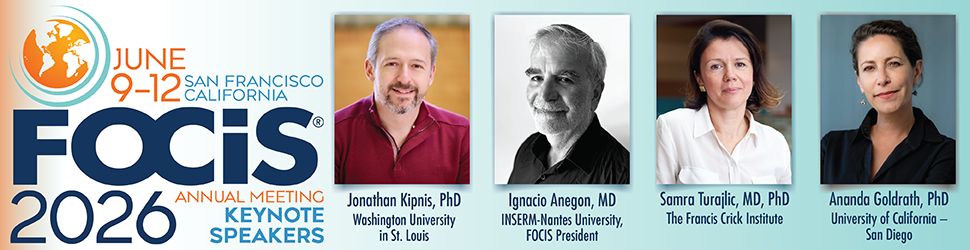
Undoubtedly, the FOCIS 2026 Annual Meeting is THE meeting in translational immunology. FOCIS brings together leading clinicians and researchers delivering the latest breakthroughs across immunology.
Plenary Sessions
- Immune Microenvironment Interactions (Health and Disease)
- Immune Receptors in Health and Disease
- Rejuvenating the Immune System
- New Approaches to Immune-mediated Disease
Thematic Sessions
- Modeling Human Immune Microenvironments
- Immune Evasion Mechanisms
- Precision Immunology for Infectious Diseases: Mechanisms, Vaccines, and Therapeutics
- Genetics and Personalized Immunology
- Maternal Fetal Immunology
- AI and Bioengineering for Immune System Discovery and Translation to Patient Care
Keynote Speaker Biographies
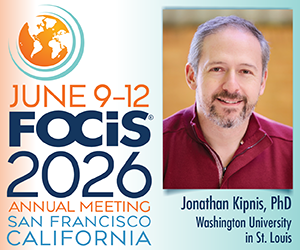
Jonathan Kipnis, PhD
Washington University in St. Louis
Dr. Jonathan (Jony) Kipnis is BJC Investigator, Alan A. and Edith L. Wolff Distinguished Professor of Pathology and Immunology and Professor of Neurology, Neuroscience, and Neurosurgery at Washington University in St. Louis, School of Medicine. He is also the inaugural Director of Brain immunology and Glia (BIG) Center at Washington University. Jony graduated from the Weizmann Institute of Science in Israel, where he was Sir Charles Clore Scholar and a recipient of distinguished prize for scientific achievements awarded by the Israeli Parliament, The Knesset.
The Kipnis lab is dedicated to unraveling the intricate interactions between the immune system and the central nervous system (CNS). It explores the cellular and molecular mechanisms that underpin these interactions across a spectrum of conditions, including neurodegenerative, neurodevelopmental, and mental disorders, as well as in physiological states like healthy aging. Dr. Kipnis and his colleagues discovered that brain function is partly reliant on the integrity and functionality of the immune system, with immune molecules (cytokines) playing neuromodulatory roles. The fascination with immunity and its role in neurophysiology is what brought the lab to a breakthrough discovery of meningeal lymphatic vessels that drain the CNS into the peripheral lymph nodes and thus serve as a physical connection between the brain and the immune system. This finding challenged the prevailing mechanisms underlying CNS “immune privilege” and opened new avenues to mechanistically study the nature of neuroimmune interactions under physiological and pathological conditions. The implications of this work are broad and range from autism to Alzheimer’s disease through neuroinflammatory conditions, such as Multiple Sclerosis.
Dr. Kipnis is a member of National Academy of Medicine and among other awards, he is a recipient NIH Director’s Pioneer award for 2018 to explore in more depth neuro-immune interactions in healthy and diseased brain.
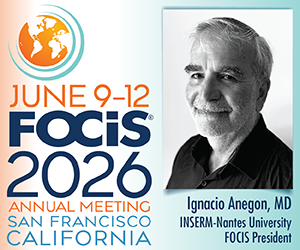
Ignacio Anegon, MD, FOCIS President
INSERM-Nantes University
Ignacio Anegon, M.D., is a permanent Director of Research at the national French biomedical research institute, INSERM. He was founder and Director (2009-2019) of INSERM-Center for Research in Transplantation Immunology as well as founder and Director of the Laboratory of Excellence in Immunology Graft Oncology (2010-2018) in Nantes, France. He was also founder and Director of the facility Transgenesis Rats ImmunoPhenomics (2000-2023). His research areas are basic and translational aspects of immune tolerance in organ transplantation, GVHD and autoimmunity. He has also developed genetic engineering techniques to genome edit cells and animals. He was co-founder and President of the SAB of AbolerIS Pharma. He has been involved with FOCIS for the last 15 years as chair of the FCE and Education Committees and as President since 2024.

Samra Turajlic, MD, PhD
The Francis Crick Institute
Prof Turajlic is a Clinician Scientist. In September 2025, Prof Turajlic was appointed the Director of the Cancer Research UK Manchester Institute. She served as a Consultant Medical Oncologist at the Royal Marsden sub-specialising in the treatment of melanoma and kidney cancer from 2015 to August 2025. Her PhD research was in the field of melanoma genetics and targeted therapy resistance, where she contributed one of the first insights into the drivers of rare melanomas and the mechanism of resistance to BRAF inhibitors.
In 2014, she was awarded a Cancer Research UK Clinician Scientist Fellowship at the CRUK London Research Institute when she began applying an evolutionary framework to understanding renal cancer reconciling many clinical observations. She became an independent Group Leader at the Francis Crick Institute in 2019 and a CRUK Advanced Clinician Scientist. Prof Turajlic’s work spans basic, translational and clinical research and she is the Chief Investigator of studies that aim to understand tumour initiation, metastasis and therapy resistance. Her lab contributes novel methods for investigating and diagnosing cancer for patient benefit. She is Faculty Lead for Basic and Translational Research of the European Society of Medical Oncology (ESMO), and the lead of the 100K Genomes Project Partnership for Melanoma. Prof Turajlic is on the American Association for Cancer Research Cancer Data Science Task Force and the Scientific Advisory Board of the Gustave Roussy (France), Memorial Sloan Kettering Kidney Cancer SPORE (US), MD Anderson’s TRACTION Platform (US), the Institute Jules Border (Belgium), Systems Biology Ireland Institute, and Genomics England (UK). She is a member of the WHO pathology working group, NCRI Bladder and Renal Cancer Clinical Studies Group, Uveal Melanoma Guidelines Group, ESMO Faculty member for genitourinary cancers and immunotherapy. She is a Trustee of patient advocacy groups, Kidney Cancer Support Network and Melanoma Focus and a Senior Editor at Macmillan Cancer Support. She receives research funding from Melanoma Research Alliance, National Institute for Health, and Department of Defence (all US), and CRUK, the MRC, Rosetrees Trust, the Royal Marsden Cancer Charity, the RMH/ICR Biomedical Research Centre (all UK), as well as industry support from Roche and BMS. In 2022 she was awarded the ESMO Translational Research Award for the work impacting cancer science and translational medicine. She is a recipient of the UK COVID Cancer pandemic prize for her work on cancer and COVID-19 which informed health policy for cancer patients. Since 2024 she leads the UK consortium MANIFEST which aims to uncover the drivers of response, resistance, and toxicity of immune-oncology agents (https://www.manifest-io.org.uk/).
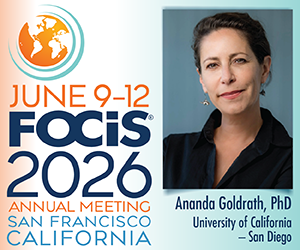
Ananda Goldrath, PhD
University of California – San Diego
Dr. Goldrath is a Professor in the Molecular Biology Department and a President’s Chair in the School of Biological Sciences at the University of California, San Diego where she joined the faculty in 2004. Dr. Goldrath led the Allen Institute for Immunology in Seattle from 2023-2025 as Executive Vice President and Director where she lead a team of ~90 individuals exploring the human immune system in health and disease. Dr. Goldrath was elected to the American Academy of Arts and Sciences in 2021 and is a former Pew Scholar and Leukemia and Lymphoma Society Fellow. She trained with Professor Michael Bevan in the Department of Immunology at the University of Washington for her graduate studies and Professors Diane Mathis and Christophe Benoit at the Joslin Diabetes Center and Harvard Medical School for her postdoctoral research. Her work has contributed to the understanding transcriptional networks that regulate the formation and maintenance of memory T cells and act to sustain their functional capacity. Dr. Goldrath’s lab has identified transcription factors that control memory versus effector T cell differentiation by driving or suppressing target genes essential for differentiation of protective T cell subsets, by regulating metabolic pathway usage, or by controlling access and survival in tissues. Using this information, it has proved possible to beneficially manipulate the immune system to eliminate infection and malignancies.