
View the biographies for our education faculty.
Faculty Biographies

Abul Abbas, MD
University of California, San Francisco
Dr. Abbas received his MD from the All India Institute of Medical Sciences in India, completed training in Pathology at the Brigham & Women’s Hospital and Harvard and joined the faculty at Harvard Medical School and the Brigham and Women’s Hospital, where he rose to become Professor of Pathology and Head of the Immunology Research Division. In 1999, he moved to the University of California San Francisco as Professor and Chairman of the Department of Pathology, and served in this role until 2018. Dr. Abbas has received several teaching awards at Harvard and UCSF, and numerous honors, including election to the National Academy of Medicine (formerly the Institute of Medicine of the National Academy of Sciences) and as a Fellow of the American Academy of Arts and Sciences. His research interest is the control of immune responses, self-tolerance and autoimmunity. He has published more than 200 peer reviewed papers and invited reviews, and is an author of two widely used textbooks of Immunology, as well as Robbins & Cotran’s Pathologic Basis of Disease.

Mark Anderson, MD, PhD
University of California, San Francisco
Dr. Anderson is a Professor in the UCSF Diabetes Center and a recognized expert in the genetic underpinnings of autoimmune diseases and the control of immune tolerance. He received his doctorate in immunology in 1992 and his medical degree in 1994 from the University of Chicago. He completed a residency and Chief Residency in Internal Medicine at the University of Minnesota and went on to complete an Adult Endocrinology Fellowship at the Massachusetts General Hospital and Harvard Medical School. While at Harvard, Dr. Anderson developed a novel genetic mouse model of a human autoimmune disorder called Autoimmune Polyglandular Syndrome Type 1 (APS1) that involves a deficiency in the Autoimmune Regulator (Aire) gene. Through his work we have come to appreciate that Aire is a major checkpoint of immune tolerance in the thymus and his lab continues to further unravel mechanisms by which this pathway operates. Dr. Anderson has won several important awards including election to The Pew Scholars Program, The American Society of Clinical Investigation, The American Association of Physicians, and The UCSF Byers Award. Mark currently holds the Robert B. Friend and Michelle M. Friend Endowed Chair in Diabetes Research and also serves as Director of UCSF Medical Scientist (MD/PhD) Training Program, Research Director of the UCSF Diabetes Center, and also as Co-Chair of the Steering Committee of the UCSF Immunology Program.
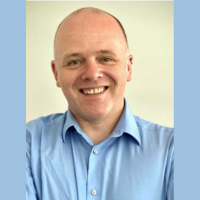
Paul Bryce, PhD
FOCIS Education Committee
After training in the UK, Paul Bryce moved in 1999 to Harvard Medical School to research allergy and immunology at Boston Children’s Hospital. In 2005, he moved to the Feinberg School of Medicine at Northwestern University in Chicago. During this time, his group were focused on mast cell biology, encompassed both clinical and preclinical approaches to researching food allergy, eosinophilic esophagitis and other allergic diseases. In 2017, Paul moved back to the east coast to head the cluster of Type 2 Inflammation & Fibrosis in the Immunology & Inflammation Therapeutic Area at Sanofi. After four years at Sanofi, Paul is now the Executive Director, Head of Discovery for ImmuneID.
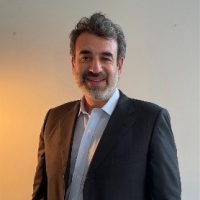
Emanuele de Rinaldis, PhD
Sanofi US
Emanuele de Rinaldis is Vice President and Global Head of Target, Disease & Systems Biology at Sanofi. He leads a global organization integrating human genetics, multi-omics, clinical data, and functional genomics to uncover disease mechanisms and accelerate the discovery of novel therapeutics and biomarkers.
Before joining Sanofi, he was Associate Professor of Translational Bioinformatics at King’s College London and held scientific leadership roles at Merck and Lion Bioscience.
Throughout his career, he has built multidisciplinary teams at the interface of biology, medicine, and data science, advancing programs from target discovery to clinical development across oncology, immunology, and neurology. He has authored more than 75 peer-reviewed publications in journals including Nature Genetics, Blood, Immunity, and The Lancet.
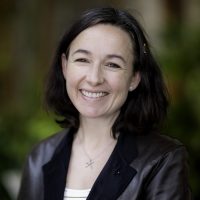
Stephanie K. Dougan, PhD
Dana Farber Cancer Institute
Dr. Stephanie Dougan received her PhD in immunology from Harvard University, where she studied lipid antigen presentation by CD1d and NKT cell development with Richard Blumberg. She then performed a postdoctoral fellowship with Hidde Ploegh at the Whitehead Institute, where she became adept in somatic cell nuclear transfer and embryo manipulation for the purpose of generating transnuclear and CRISPR genome-modified mice.
Dr. Dougan joined the faculty at Harvard Medical School (HMS) and Dana-Farber Cancer Institute in 2014, where her lab uses unique mouse models to study the immune response to tumors. She is particularly interested in tumors that do not induce a CD8 T cell response at baseline, and has been using pancreatic cancer as a model to develop new immunotherapies for non-T cell infiltrated tumors.
Dr. Dougan is the course director for the Harvard Immunology Summer Undergraduate Program, the co-director for the graduate school class Immunology 201, and the course director for an Advanced Integrated Science course in immunology for third-year HMS medical students.
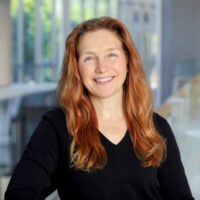
Stephanie Eisenbarth, MD, PhD
Northwestern University
Dr. Eisenbarth is the Chief of Allergy and Immunology at the Northwestern University Feinberg School of Medicine. Eisenbarth is an internationally renowned immunologist whose research focuses on how dendritic cells, B-cells and T-cells interact to induce antibody responses. She is supported by grant funding from the National Institutes of Health and numerous foundations for her work studying genetic factors in allergy and translational immunology. She is a member of the American Society of Clinical Investigation and numerous other professional associations, serves as the associate scientific advisor for the journal Science Immunology, and has published many peer-reviewed papers, editorials and review articles in journals including Science, Nature, Journal of Allergy and Clinical Immunology, Immunity, Journal of Experimental Medicine and more.
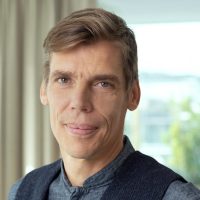
Magnus Fontes, PhD
Institut Roche
Magnus Fontes holds a PhD in Mathematics and is General Manager of Institut Roche in Paris; Roche’s institute for collaborative and multidisciplinary biomedical research, https://institut.roche.com/. Fontes is adjunct professor of mathematics at Lund University, Sweden, and co-founder and scientific advisor of the bioinformatics software company Qlucore, www.qlucore.com.
Magnus Fontes has extensive industrial and academic experience. For example; 2003-2014 Head of the Centre for Mathematical Sciences at Lund University, Sweden; 2014-2017 Director at the Centre for Bioinformatics Biostatistics and Integrative Biology (C3BI) and Head of the International Group for Data Analysis, Institut Pasteur, Paris, France. Then 2018-2020 Principal Scientist and Head of Systems Cancer Immunology at Genentech, California, USA, before taking up his current role as General Manager of Institut Roche in 2020.
Fontes has held several commissions of trust, e.g.: 2012-2013 President of the European Consortium for Mathematics in Industry (ECMI); 2008-2015 Vice chairman of the Swedish National Committee for Mathematics at the Royal Swedish Academy of Science; 2015-present Member of the Royal Physiographic Society of Lund and 2015-present Member of the Education Committee of FOCIS.
Fontes’ research interests and publications cover fundamental mathematics as well as mathematical modeling applications, including development of methods and algorithms targeting biomedical and clinical applications. His current research is focused on modeling of pathogen-immune system interactions and systems immunology, trying to uncover functional biological mechanisms.
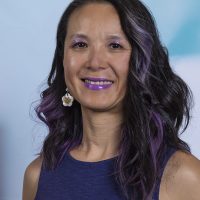
Elena Hsieh, MD
University of Colorado Anschutz Medical Campus
Elena Hsieh earned her MD degree from University of California San Francisco (UCSF) in 2008. She completed a residency in pediatrics at the University of California Los Angeles (UCLA) in 2011, and a fellowship in Allergy and Immunology at Stanford University in 2014. During her fellowship she worked in Dr. Garry Nolan’s laboratory studying pediatric lupus. She continued her research and clinical work at Stanford University as an Instructor for an additional year. In 2015, she joined the faculty at the University of Colorado School of Medicine, jointly affiliated with the Children’s Hospital of Colorado. She is currently an Associate Professor of the Department of Immunology and Microbiology, and Pediatrics, Section of Allergy and Immunology. She is the Director of the Jeffrey Modell Center for Primary Immunodeficiency, and co-directs the Severe Combined Immunodeficiency Newborn Screen Program, both of which constitute the foundation of the immunodeficiency program at Children’s Hospital Colorado. She is also the director of University of Colorado as a FOCIS Center of Excellence.
The Hsieh lab addresses mechanistic and translational questions in human immunology to enable a deeper understanding of normal immune function, and dysregulated immune processes in immunodeficiency, autoimmunity, and the overlap between the two. Her lab focuses on classical pediatric autoimmune disorders such as lupus, multiple sclerosis, and type 1 diabetes, as well as genetic immune dysregulation disorders. Her lab has identified several novel human inborn errors of immunity (IEI) that lead to severe multi-organ autoimmunity/autoinflammation and infectious susceptibility. Her lab has developed mouse models from homologous human mutations to further enlighten underlying disease mechanism. Dr. Hsieh expanded her studies of immune dysregulation to Down Syndrome and COVID-19 disease given the type I interferon hypersensitivity observed in these disorders. Elena joined the Journal of Human Immunity as Associate Editor in 2025.
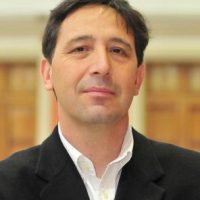
Alexis Kalergis, PhD
Pontificia Universidad Católica de Chile
Dr. Alexis M. Kalergis is a Full Professor at the Schools of Biological Sciences and Medicine, P. Universidad Católica de Chile. He also acted as Visiting Faculty at The Albert Einstein College of Medicine in New York, The University of Nantes in France and the University of Iowa, where he held a Helen C. Levitt Visiting Professorship. He is a Biochemistry graduate from P. Universidad Católica of Chile and obtained his MSc and PhD in Microbiology and Immunology from the Albert Einstein College of Medicine in New York. His work was awarded the Julius Marmur Award for the best graduate thesis. He was a postdoctoral trainee at the Albert Einstein and The Rockefeller University, supported by a Helen Hay Whitney Fellowship. He has trained hundreds of students, lectured as an invited speaker in 350 national and international conferences, published over 310 articles in leading journals and over 60 patent applications.
He is a member of the American Society of Immunology, the American Society of Microbiology, and the Chilean Societies for Biology, Cell Biology, Biochemistry-Molecular Biology and Immunology. He was given in 2004 the national award to the most outstanding young scientist by the Biology Society of Chile and selected as one of the fifty Chilean young leaders in 2005. In 2006 he was included as a member of the Frontiers of Science program belonging to the Chilean Academy of Sciences. He has been awarded several important national and international research grants. He has been Director of the Millennium Nucleus and Institute on Immunology and Immunotherapy (2006-2031), which was appointed as a Center of Excellence by the Federation of Clinical of Immunology Societies and he as a member of the Board of Directors of this very prestigious organization. Furthermore, Dr. Kalergis coordinated of a Consortium Grant on Biomedicine and as part of this project, with his colleagues with work on the technological transfer of basic biomedical knowledge (bench) to concrete applications consisting of new therapy tools for diseases that are prevalent in the Chilean population. He was appointed as a member of the Presidential Science Committee and the Senate Committee for Science (Challenges for the future). Further, he was nominated as Scientific Liaison ICGEB, Director of the Biotechnology Committee at CONICYT and
subsequently member of the Council of Scientific Advisors of the ICGEB (a United Nations Organization).
Dr. Kalergis was awarded the Gold Medal by the World Intellectual Property Organization, the National Innovation Award, the Merit Award, Abdon Cifuentes Award, the Innovation Career Path Award and the Image of Chile Award. He was incorporated to the Chilean Academy of Sciences and is a member of the Presidential Science Advisory Council. During the pandemic, his laboratory generated a vaccine prototype for a COVID19 vaccine, and he coordinated and directed the execution of phase 3 clinical trials for an inactivated SARS-CoV-2 vaccine that was subsequently used for mass vaccination in Chile.
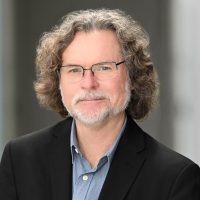
Lewis Lanier, PhD
University of California, San Francisco
Lewis L. Lanier is the J. Michael Bishop MD Distinguished Professor and Chairman of the Department of Microbiology and Immunology at the University of California San Francisco and Director of the Parker Institute for Cancer Immunotherapy at UCSF. Dr. Lanier received his Ph.D. from the University of North Carolina – Chapel Hill. After postdoctoral studies, he joined the Becton Dickinson Monoclonal Center, advancing to Associate Director. In 1990, he moved to the DNAX Research Institute, where he was Director of Immunobiology. In 1999, Dr. Lanier returned to academics as a Professor on the faculty of UCSF. His research group studies Natural Killer (NK) cells, which recognize and eliminate cells that have become transformed or infected by viruses. Dr. Lanier is an American Cancer Society Professor and in 2010 was elected to the US National Academy of Sciences, in 2011 was elected to the American Academy of Arts and Sciences, served as President of the American Association for Immunologists from 2006-2007 and received the AAI Excellence in Mentoring Award in 2017.
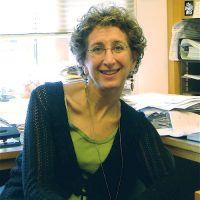
Terri Laufer, MD
University of Pennsylvania
Terri Laufer is a rheumatologist and immunologist at the University of Pennsylvania. Her laboratory studies the interactions between CD4+ T cells and MHC class II-positive antigen presenting cells that mediate responses to pathogens and autoimmunity.

Andrew Lichtman, MD, PhD
Brigham and Women’s Hospital
Dr. Lichtman received an A.B degree of Bowdoin College in 1974, and MD and PhD (Biophysics) degrees from the University of Rochester School of Medicine in 1981. He trained in anatomic pathology and completed a post-doctoral research fellowship at the Brigham and Women’s Hospital between 1982-1985. He is a diplomat of the American Board of Pathology, and currently holds the position of Professor of Pathology at Brigham and Women’s Hospital and Harvard Medical School. He has been the Principal Investigator of an N.I.H. -funded research laboratory for over 30 years. His current research focuses on T cell-mediated responses in cardiovascular diseases, including atherosclerosis and myocarditis. Dr. Lichtman has taught in and directed Pathology and Immunology courses at Harvard Medical School (HMS), and taught postgraduate Immunology courses worldwide. He is a coauthor of two widely used text books of immunology, and is a past chair of the Education Committee and the Publications Committee of the Federation of Clinical Immunology Societies (FOCIS). He has received numerous teaching awards at HMS, and is the recipient of the 2014 Robbins Distinguished Educator Award of the American Society of Investigative Pathology.
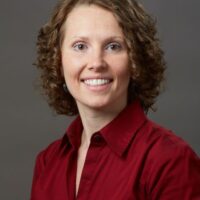
Carrie L. Lucas, PhD
Yale University
Dr. Carrie L. Lucas received her PhD from Harvard Medical School and her postdoctoral training from the National Institutes of Health, NIAID. The Lucas laboratory is devoted to discovering new and translationally relevant principles of immunology by defining and studying human genetic immune disorders. Combining human genomics, in vitro studies using primary patient cells, and in vivo mouse modeling approaches, her team seeks to gain incisive basic and translational insights starting with patients. The lab’s focus on primary immunodeficiencies has largely centered around phosphoinositide 3-kinase (PI3K) signaling and disease mechanisms and treatments in patients with mutations in PI3K subunits, including ‘Activated PI3K-delta Syndrome’ (APDS1 and APDS2) and ‘Inactivated PI3K-gamma Syndrome’ (IPGS). More recently, the lab has added an emphasis on studying inflammatory diseases, including SARS-CoV-2-associated ‘multisystem inflammatory syndrome in children’ (MIS-C) and vaccine-associated myocarditis. A major current effort centers on new biology illuminated by a monogenic autoinflammatory disease the Lucas lab named ‘Deficiency in ELF4, X-linked’ (DEX). Each of our research projects starts with an initial focus on dissecting pediatric immune diseases and aims to leverage that knowledge for new therapies, including precision medicine approaches in monogenic diseases, which has recently been achieved with FDA approval of targeted therapy in APDS. The rare diseases studied uniquely enable elucidation of in-depth mechanistic insights into human immunology, thereby providing translational knowledge to improve understanding and treatment of a broader set of common diseases with immune involvement.
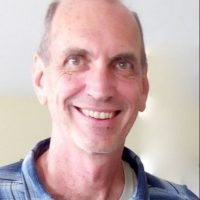
Holden T. Maecker, PhD
Stanford University
Dr. Maecker received a BS in Microbiology from Purdue University and a PhD in Cancer Biology from Stanford University. He did postdoctoral work with Ronald and Shoshana Levy at Stanford, and was an Assistant Professor of Biology at Loyola University Chicago, as well as a Senior Scientist at BD Biosciences, San Jose, CA. He is currently a Professor of Microbiology and Immunology, and Director of the Human Immune Monitoring Center, at Stanford University. His research focuses on measuring immune competence, as well as how specific cellular immune responses correlate with immune protection.
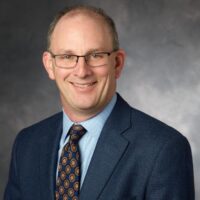
Jonathan Maltzman, MD, PhD
Stanford University
Dr. Maltzman is Associate Professor of Medicine and Director of Basic Science Research in Nephrology at the Stanford University School of Medicine. His labs studies tolerance, Tregs and immune responses to latent virus in solid organ transplant.
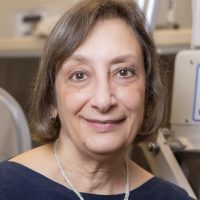
Cathryn Nagler, PhD
University of Chicago
Cathryn Nagler graduated with honors from Barnard College, Columbia University. She obtained her Ph.D. from Vilcek Institute of Biomedical Science at N.Y.U. and did a postdoctoral fellowship at M.I.T. She was Associate Professor of Pediatrics (Immunology) at Harvard Medical School prior to joining the University of Chicago in 2009. Dr. Nagler received the Distinguished Faculty Award for Leadership in Program Innovation from the University of Chicago in 2017. She was listed among Crain’s Chicago Business Tech Top 50 Women in 2018 and Notable Women in HealthCare in 2019 for her work with her academic start-up company ClostraBio. Academic honors include the American Academy of Allergy, Asthma and Immunology (AAAAI) Foundation and Louis M. Mendelson Award Lectureship and the Siegel Lectureship at UCLA. She was elected as a Distinguished Fellow of the American Association of Immunologists (AAI) in 2020. She recently completed a three year term as the AAI Program Chair.
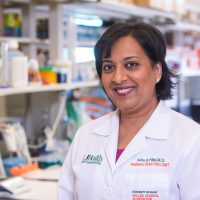
Asha Pillai, MD
Regeneron Therapeutics
Dr. Pillai completed a B.S. summa cum laude in Microbiology and Immunology as well as a dual fellowship in Medical Hematology/BMT & Pediatric Hematology/Oncology/BMT at Stanford Univerity and Ruth Kirschstein NRSA BMT Research Fellowship in the laboratory of Sam Strober, transitioning to a K08 Career Development Award from the NHLBI. Her and her group’s work was the first to define a critical role for murine and human iNKT cells in separating GVHD from graft-versus-leukemia (GVL) effect after allogeneic BMT, and her independent original work established a key innate-adaptive immune regulatory axis as a pathway allowing MHC-mismatched allo-transplantation tolerance for both hematopoietic stem cell transplantation (HSCT) and solid organ transplantation (SOT).
Her group has developed robust preclinical models allowing the development of haploidentical transplantation conditioning protocols in children which preserved GVL effect while protecting from GVHD. These served as the basis for several parent à child HSCT protocols for malignancies through the BMT Clinical Trials Network (BMT-CTN) and Pediatric Blood and Marrow Transplant Consortium (PBMTC). Her research group’s evolving interests have led them to explore, in parallel, the role of invariant natural killer T cells to optimize peri-transplant innate cellular immunotherapy to optimally target solid tumors in children and adults. She is a member of several advisory committees and editorial boards including the Medical Advisory Board of the Asian American Donor Program (AADP) and editorial boards of Science Immunology, Transplantation and Cellular Therapy (formerly Biology of Blood and Marrow Transplantation), Frontiers in Transplantation, and Frontiers in Immunology. She joined Regeneron in September 2022 as Chair in Hematology, Hematologic Malignancies, and Transplantation on the Global Development Scientific Council, where she now serves as Executive Medical Director for Regeneron Cell Medicines. She has served as standing member of various federal and national grant review panels, foundations, scientific councils as well as key scientific committees in the US, UK, and Europe.
Dr. Pillai has served on the Educational Committee of FOCIS since 2019, developing the FOCIS Advanced Course in Basic and Translational Immunology in Asia (2019, 2025). She serves as course Co-Director for CII since February of 2023.
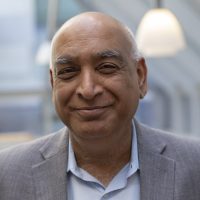
Shiv Pillai, MD, PhD
Ragon Institute of MGH, MIT and Harvard
Dr. Pillai completed his medical studies at the Christian Medical College, Vellore, and went on to obtain a PhD in Biochemistry from Calcutta University. He was an investigator at the Kothari Center for Gastroenterology in Calcutta until 1983, and was a postdoctoral fellow at the Whitehead Institute in Cambridge from 1984-1988. Since 1988 he has been a faculty member at the Cancer Center and the Department of Medicine at Massachusetts General Hospital and Harvard Medical School. He discovered surrogate light chains and the pre-B receptor as a post-doctoral fellow, and his laboratory at MGH also discovered the role of Btk in B cell signaling. His group has largely focused on studies on B lymphocyte development, signaling, tolerance, and more recently on the pathogenesis of human fibrotic autoimmune disorders. Dr. Pillai has been on the Editorial Boards of the Journal of Clinical Investigation and the Journal of Immunology, is the director of immunology courses taught at Harvard College and Harvard Medical School, and teaches in a number of other courses at both institutions. He has received numerous teaching and mentoring awards, including the Irving London Award and the Thomas McMahon Award, is the author of Lymphocyte Development, and is co-author with Abul Abbas and Andrew Lichtman of Cellular and Molecular Immunology and Basic Immunology.