Journal Club

FOCIS Journal Club

The FOCIS journal club aims to highlight the recent publications of FOCIS members and affiliated member societies related to clinical and translational immunology. The journal club is organized as a moderated virtual research presentation covering recent publications pertinent to the scientific mission of FOCIS.

These one-hour seminar presentations are organized in a joint presentation format comprising a short introduction to a domain from senior corresponding authors, followed by a presentation of the manuscript by first authors/trainees. The journal club is open to FOCIS members and the broader scientific community.

What to Expect

Each session, we dive into a peer-reviewed article and host a guided discussion led by the primary author. You’ll gain insights, ask questions, and connect with others who share your interests. The article will be provided to you in advance via email.

FOCIS Journal Club

Past Journal Club

Paper for discussion: HSV-1 alters lipid metabolism and induces lipid droplet accumulation in functionally impaired mouse dendritic cells
Date & Time: July 29, 2026 from 11:00 AM – 12:00 PM Central Time.
Platform: Zoom (Link will be sent via the email address you registered with).

Presented by:

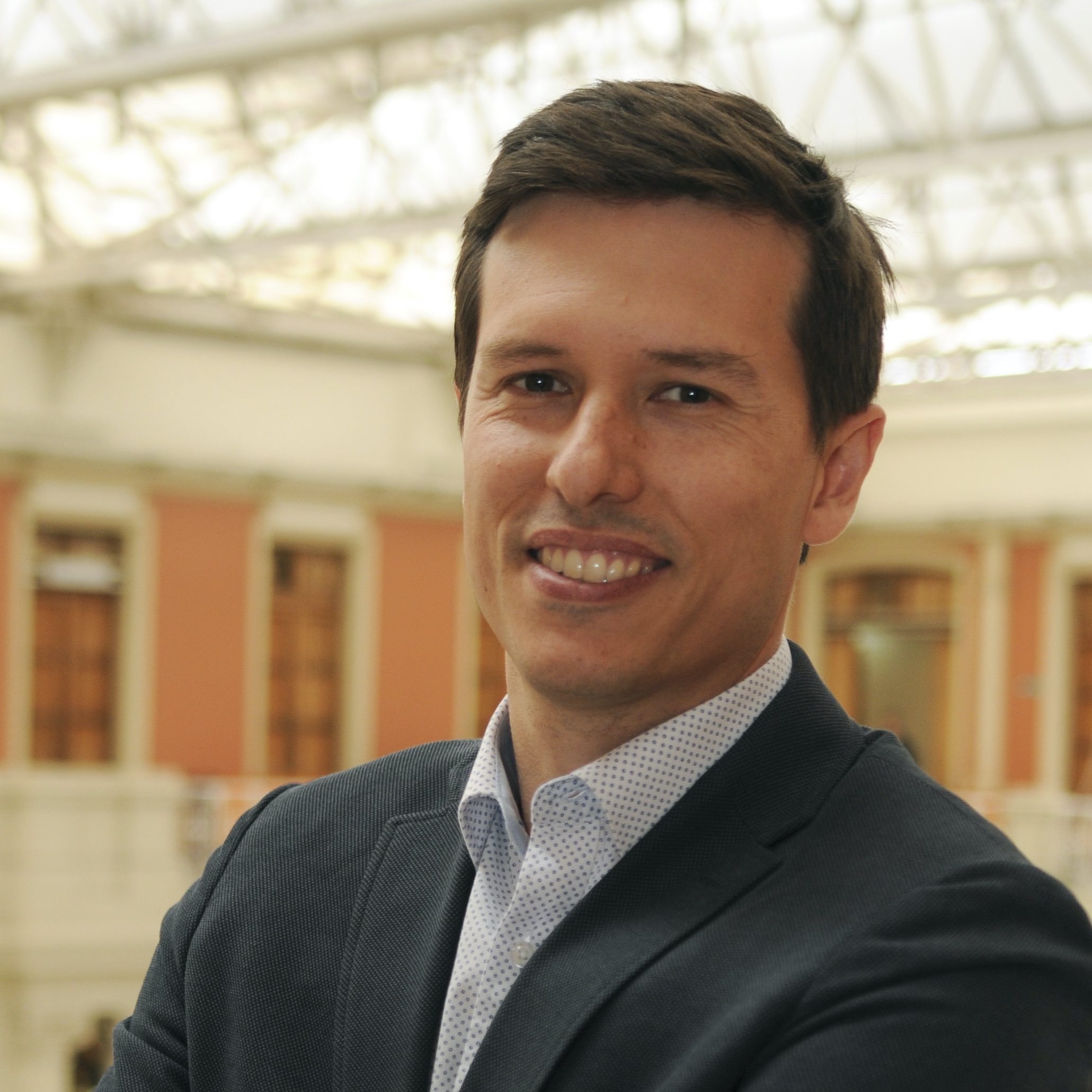
Pablo González, PhD
Full Professor
Millennium Institute on Immunology and Immunotherapy, FOCIS Center of Excellence
Pontificia Universidad Católica de Chile

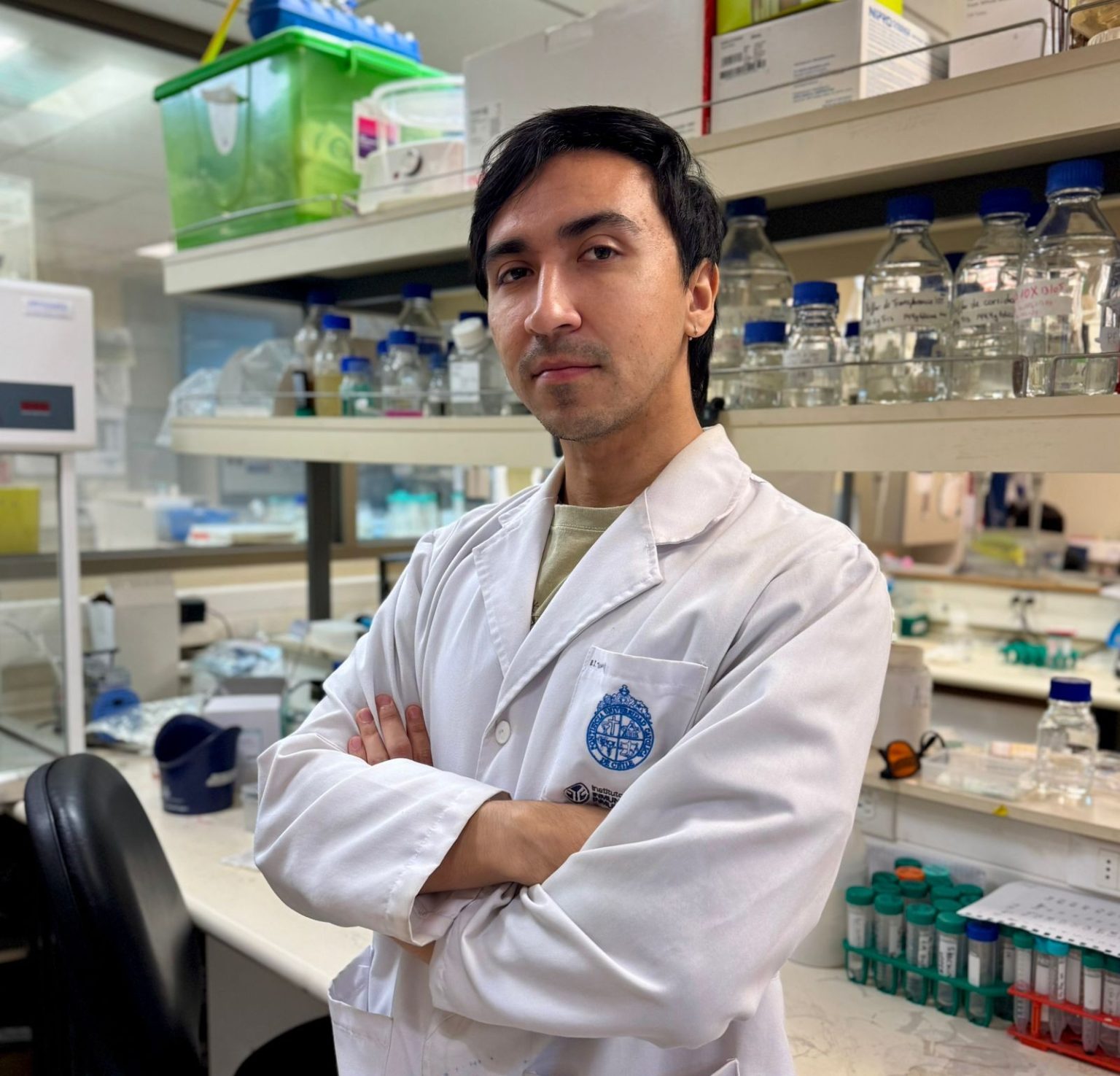
Felipe Cancino, PhD Student
Millennium Institute on Immunology and Immunotherapy, FOCIS Center of Excellence
Faculty of Biological Sciences, Pontificia Universidad Católica de Chile

Summary:

In this study, we found that HSV-1 infection of dendritic cells (DCs) alters the expression of lipid metabolism genes and elicits lipid droplet (LD) accumulation. Notably, inhibition of key lipid-metabolism enzymes in HSV-1-infected DCs restored their viability and key DC functions, including the activation of virus-specific CD8+ T cells.

FOCIS is excited to announce that attending this Journal Club will be available for free for everyone! To receive the recording afterwards, you must be a FOCIS member. To become a member click here!

Not a member?

Easily join online.

View our membership rates and become a FOCIS member today.

Presenters

Foto PAGonzalez light

Pablo González, PhD
Full Professor
Millennium Institute on Immunology and Immunotherapy, FOCIS Center of Excellence
Pontificia Universidad Católica de Chile

felipe

Felipe Cancino, PhD student
Millennium Institute on Immunology and Immunotherapy, FOCIS Center of Excellence
Faculty of Biological Sciences
Pontificia Universidad Católica de Chile

If you are a member of a FOCIS Center of Excellence or a Member Society and are interested in having your work highlighted, please fill out the form below.

Past Events

March 17, 2026

Paper for discussion: Linking Skin and Joint Inflammation in Psoriatic Arthritis through Shared CD8+ T Cell Clones
Date & Time: March 17, 2026 from 11:00 AM – 12:00 PM Central Time.
Platform: Zoom (Link will be sent via the email address you registered with).

Presented by: Lucy Durham, MBBS, PhD & Leonie Taams, PhD

In this paper, Durham and colleagues report that skin and joint inflammation in psoriatic arthritis

can be linked by CD8+ T cells that exhibit both shared and distinct cellular features across these tissues. Using single‑cell RNA‑seq, TCR repertoire analysis, and spatial transcriptomics, they examined paired skin, synovial tissue, synovial fluid, and peripheral blood samples from the same individuals. Their data reveal an enrichment of type 17 CD8+ tissue-resident memory T (Trm) cells in both the skin and joint, with a stronger interleukin-17 signature in the skin than the joint. Shared CD8⁺ T‑cell clones across the two tissues further support coordinated immune activation. At the same time, transcriptomic differences among CD8⁺ T‑cell subsets — including Trm cells — between skin and joint sites suggest that psoriatic arthritis and psoriasis involve overlapping yet distinct CD8⁺ T‑cell–driven mechanisms.

Presenters

lucy durham

Lucy Durham, MBBS, PhD

King’s College London

Leonie Taams 2025

Leonie Taams, PhD

King’s College London

January 28, 2026

Paper for discussion: CAR Treg cells mediate linked suppression and infectious tolerance in islet transplantation in mice
Date & Time: January 28, 2026 from 10:00 AM – 11:00 AM Central Time.
Platform: Zoom (Link will be sent via the email address you registered with).

Using a mouse model of HLA-A2+ islet transplantation followed by diabetogenic T cell transfer, we showed that HLA-A2-specific chimeric antigen receptor regulatory T cells (A2-CAR Tregs) protected the HLA-A2+ islet graft against autoimmune attack, as was hypothesized based on previous reports demonstrating that engineered Tregs effectively protect tissues expressing their cognate antigen. In addition, we found that A2-CAR Treg treatment mediated linked suppression by also protecting the endogenous pancreas that lacked the expression of HLA-A2. Further, this protection persisted beyond the removal of A2-CAR Tregs, demonstrating infectious tolerance and the immune system’s reprograming for tolerance. This study suggests that engineered Tregs may be able to establish long-lived tolerance of cognate and distinct antigens with a single, transient dose.

Presented by: Christine Wardell, PhD Student & Megan Levings, PhD

Presenters

headshot christine wardell

Christine Wardell, PhD Student

The University of British Columbia

Levings Megan 2018 small

Megan Levings, PhD

The University of British Columbia

Monday, October 13

Paper for discussion: Blood immunophenotyping identifies distinct kidney histopathology and outcomes in patients with lupus nephritis
Date & Time: October 13, 2025 from 11:00 AM – 12:00 PM Central Time.
Platform: Zoom (Link will be sent via the email address you registered with).

Lupus is a severe, systemic autoimmune disease that frequently damages the kidney, causing a condition known as lupus nephritis. Horisberger and colleagues used mass cytometry immune profiling of blood samples from a large cohort of patients with lupus nephritis in the Accelerating Medicines Partnership SLE Network study to delineate 3 immunologically distinct subgroups of patients that differ in the extent of immune injury in the kidney and in likelihood of response to standard therapies. This study highlights the potential of immune profiling to identify clinically relevant immune features in patients with a systemic autoimmune disease.

Presented by: Deepak Rao, MD, PhD & Alice Horisberger, MD

Speakers

HeadshotDeepakRao040722[197994]

Deepak Rao, MD PhD
Jonathan S. Coblyn and Michael B. Brenner Endowed Chair of Rheumatology and Immunology
Associate Professor of Medicine
Brigham and Women’s Hospital
Harvard Medical School

Alice Headshot 1

Alice Horisberger, MD
Clinician Scientist
Division of Immunology and Allergy at Lausanne University Hospital

Skip to toolbar