
FCE Director
University College London (UCL) Centre for Adolescent Rheumatology
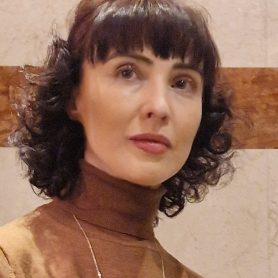
FCE Director
University College London (UCL) Centre for Adolescent Rheumatology
How did you first get involved in immunology?
I would like to start by thanking you for the invitation. I’m happy to talk a little bit about my career journey because I realize it’s a little bit different, having relocated from my home country to the UK in 2009. I’m a clinician by training. I’m an adult rheumatologist and I trained in Bucharest. After relocating to the UK, I also trained in adolescent rheumatology. In 2018, my first opportunity to come into contact with a remotely related immunology field of research was during my PhD. I’ve done my PhD in Bucharest, but part of the research was undertaken at the University of Leeds, and I worked with Professor David Beech, who is an expert in membrane biology and systems biology. We studied a membrane channel expression in synoviocytes, which are the cells lining of the joints.
After that, I got more involved in research. I had the first two opportunities to do immunology research when I joined UCL in 2013. I started a collaboration with Professor Elizabeth Jury, and I’ve been working with her since then. More recently, since 2018, I had the opportunity to work as part of the Center for Adolescent Rheumatology at the University College London with Professor Lucy Wedderburn, who has been an amazing mentor throughout this journey. I navigated through different areas and types of collaborations, but I’m quite passionate about doing research that has clinical relevance for our patients.
Tell us about the research you’re most proud of.
I’m very proud of the research that we did together with the junior faculty in the way that this research supported them in their career. We are quite unique in our interest in investigating the role of sex determinants on immune functions. We’ve been trying to understand the contribution of the sex chromosomes versus sex hormones in shaping immune responses, particularly relevant for autoimmune diseases, such as rheumatic diseases, because many of them have strong female sex bias. Some of our discoveries have shown that post puberty girls, being exposed to estrogen, have a higher proportion of class switch B cells that may drive auto reactivity and auto-antibody production that we see in autoimmune diseases. We also investigated the interferon production, and again, we found that in girls post puberty, both sex chromosomes and sex hormones contribute to increased antiviral responses in females that probably have some evolutionary meaning.
We also investigated the way the Tregs, which mainly have anti-inflammatory properties, are upregulated and more functional in boys post-puberty. We are very interested in understanding the background of the immune functions and modelling them in a disease landscape that is relevant for understanding disease risks and hopefully for the discovering of new treatments. I’m also quite passionate about trying to put new conditions on the map, conditions that are less well characterized, especially in children and young people, and in finding biomarkers that can help clinical practice. We’ve been focused on cardiovascular risk biomarkers for children and young people with lupus, addressing a critical unmet need. These are a few areas of research, and the research has been made possible by our PhD students, postdoctoral researchers, and other collaborators. I’m particularly proud of them being part of the FOCIS Center of Excellence that we just established.
What advice would you give to young researchers just starting out in the field?
I generally believe that if what we do inspires us and if we’re passionate about what we do, this shouldn’t feel like work at all. My advice to the young researchers would be to opt for projects and ideas, then inspire and motivate them, to surround themselves with positive people, supportive people, not to be afraid to reevaluate their hypothesis, their findings, and to understand that research is a journey with ups and downs. Sometimes we learn more from setbacks than from bigger discoveries. An individual who is a good researcher should understand their own abilities, and skills and talents to focus and to nurture these qualities that can support their career success. Also, having someone they admire as a mentor I think is really, really important because this is valuable in nurturing those qualities that are required, from courage to creativity and resilience, that we know are very much needed for success in a research career. I would also advise them to celebrate and share their achievements with people who support them and the ones that are close to them and find contentment and enjoyment in the lifelong learning that research involves.
Switching gears, how did you first get involved with FOCIS?
Because we’ve been talking about mentors, this is a very good example of how a mentor colleague introduced me to the FOCIS community. Professor Wedderburn from UCL, from the Institute of Child Health at UCL, who I have collaborated with since 2018, suggested I join the FOCIS community to expand on our already diverse international collaborations and the network of interactions in the field of immunology. I’m very grateful to her for introducing me and for her generosity to propose me as the director of the center, which will bring together partners across two different faculties within UCL: one focused on pediatric research and another one focused on research across the lifespan, including adolescence, young adulthood and adulthood. I’m also very, very grateful for the opportunity to bring together the international collaborators that are now part of our scientific advisory board of the new center.
How do you think FOCIS has changed your world?
I believe in interdisciplinary research, and we are doing research, which is at the intersection of immunology, clinical immunology with rheumatology, which is my specialty, and is across the lifespan. But we also do cardiovascular research, and research in immune metabolism, endocrinology, and transgender health because we’ve been working with cohorts of gender diverse young people to be able to answer important questions related to autoimmune disease risk. I’m also very keen to be part of a community which supports both education as well as collaboration and networking and gives us the possibility to disseminate our research results.
If your colleague asked you why they should join FOCIS, what would you tell them?
I would definitely tell them that FOCIS provides that unique opportunity for education knowledge exchange between the world leaders in immunology. It’s also a platform for education and high-quality research dissemination. I’ll also tell them that we can learn so much from colleagues doing research in other disciplines that are relevant to immunology and FOCIS offers this unique opportunity. None of our specialty congresses or symposia are able to achieve this kind of cross-disciplinarity approach than what FOCIS aims for. In addition to the immunology societies meetings, it nurtures this sense of community in an area of research that is relevant for both basic scientists, researchers, as well as clinicians, aiming in the end to support research for the benefit of the entire society.
We’re going to talk a little bit now about your FCE. Can you tell us about the research that you’re doing?
Our research is relevant as much as possible to the patients. They are young adults, adolescents and children, and we work with them, taking into account their main research priorities and unanswered questions, as well as involving them in our research design and dissemination. We’ve been trying to patent (and hopefully this will be very soon finalized), a biomarker signature that can predict the cardiovascular risk in young people, which is particularly relevant in terms of the potential of being implemented in clinical practice, as well as giving us the possibility to identify young people at risk early throughout their disease course. Additionally, we are looking at various molecular signatures from transcriptomic to immunological signatures, and genomic and metabolomic signatures related to the sex determinants of autoimmune diseases. We identified sex hormones or chromosome driven transcriptomic changes that may overlap in normal individuals with the ones who develop disease, which gives us the possibility to understand which processes are likely to be the main drivers of autoimmunity, and to establish a background for new potential discoveries.
We are also keen on putting new diseases on the map to serve the less characterized populations and we are working towards defining the clinical features, the clinical phenotype, as well as classify childhood onset Sjögren’s, which is quite a rare disease. We are also aiming to characterize it molecularly in comparison with the adult phenotype, to provide some background knowledge that will help advance the area of research and the therapeutic approaches in this disease. We are passionate to make our research relevant for the entire society without boundaries, and we’ve been working with bioinformaticians and applying machine learning and AI techniques and other methods to evaluate the already published literature to try to understand how researchers account for sex and gender determinants of disease risk and manifestations to tackle healthcare inequalities. I would say that these are probably the main areas of research we are currently working on at present.
What are the specific goals that you have as an FCE director?
My dream goal is to establish new and exciting collaborations and give our junior and senior faculty exposure to new opportunities of networking and training. I appreciate that FOCIS provides opportunities which were not available to us before. Focusing on that is one of my main goals. I would also like to be actively involved in the FOCIS community and identify new partnerships to enhance and facilitate the delivery of our own research strategy. More importantly, I would like to learn from shared knowledge and practices to overcome our specific challenges. I would also like to actively participate in the meetings and present our research and enhance the visibility of our center.
What are your biggest challenges?
This is something you’re going to hear from many people: obtaining research funding in a timely manner to ensure that people’s careers and our research projects can be continued and adequately supported. Because there is always a degree of uncertainty in research, in terms of resources and access, I think it’ll be very important for me to try to understand how we can tackle some of the challenges that I’m absolutely sure are not particular to us but rather universal. There are ways of improving the creativity in tacking these challenges by learning from other FOCIS members about funding opportunities, collaborations, and creative ways to overcome challenges that I think are faced by all researchers across the world.
Why did you apply to be an FCE?
FOCIS is a very relevant forum for us to be a part of and is also very much aligned with our research strategy and ambitions because we believe in multidisciplinary research. We believe in clinicians and researchers working together, and we are also interested in doing research that is relevant for the entire society. We will join a highly reputable faculty and membership as well and we will have exposure to very good quality training, research-related activities that can enhance the expertise of our own teams and provide other new opportunities for networking and mentoring, which are very attractive for our research interests as well as vision. I am a strong believer in international collaborators and collaborations and opportunities to get feedback on your own research, as I think they are key to maintaining and delivering high quality research.
Anything else to add?
No, they (FOCIS leadership team) were very good at covering pretty much everything that I think is relevant. My take on being part of this community is that it is going to be a process. We are going to learn and grow together, and this is what I’m quite interested in exploring in the future and excited to be part of. I don’t have any other specific questions.
Those are all the questions for today, thank you for your time.